
Don’t Wait for the World to Settle — Build Brands That Can Succeed Through Change
Don’t Wait for the World to Settle — Build Brands That Can Succeed Through Change
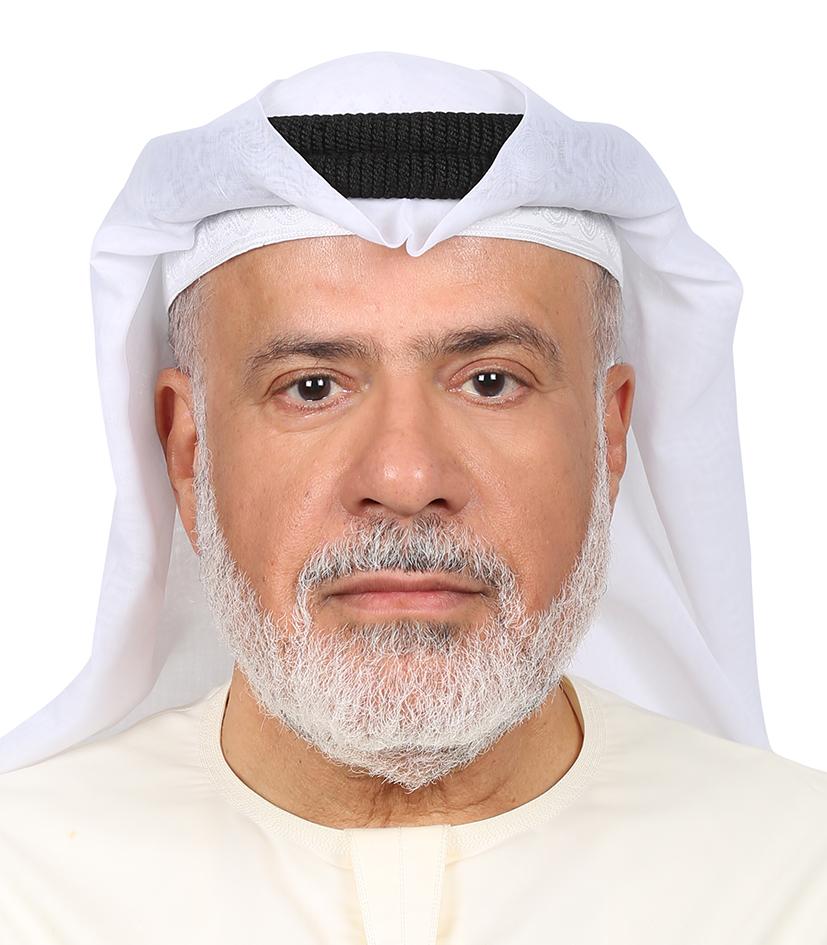
By H.E. Mohammed Al Madani
Chairman, Franchise & Trademark Association – TAGMOA Middle East & North Africa
Whenever I speak with brand owners and investors today, one question comes up repeatedly: Is this really the right time to expand?
My answer is simple: if we are waiting for the world to return to a state of complete stability, we may be waiting for a very long time.
Markets are changing rapidly. Costs rise and fall. Supply chains are under pressure. Consumer tastes are evolving. Technology is reshaping the way businesses sell, operate and manage their organisations.
So I believe the real question is no longer:
When will conditions stabilise?
It is:
Have we built a brand that can deal with change?
In my view, that is what separates a brand that can continue to grow from one that may succeed in a single market but struggles when it begins its expansion journey.
Before Looking for Your Next Market, Look Inside Your Brand
Brand owners sometimes begin with the wrong question.
Which country should I enter? Who is the right investor? How many outlets can I open?
Before asking any of these questions, we need to look honestly at the business itself.
Is the business model genuinely strong?
Is it profitable and repeatable?
Can another team operate it to the same standard?
Are the processes clearly defined and documented?
Is the customer experience consistent?
And can the brand continue to grow without the founder having to be involved in every operational detail?
Franchising is not a magic solution to the challenges of growth. If weaknesses already exist within the business model, expansion may simply expose them faster.
That is why I often tell brand owners:
Do not expand the number of outlets before expanding your organisation’s ability to manage them.
Responsible Consumption Begins with Respecting Resources
In today’s environment, no brand can afford to ignore operational efficiency.
But when I speak about responsible consumption and resource optimisation, I do not mean reducing quality or giving customers a lesser experience.
Quite the opposite.
It means understanding where our resources are going, where waste exists and where improvements can be made.
Raw materials, energy and water consumption, inventory, spoilage, labour hours, transportation and storage may appear to be small operational details. But when a brand grows into a network of dozens or hundreds of locations, those details make an enormous difference.
A smart organisation is not one that cuts costs indiscriminately. It is one that understands how to generate greater value from every dirham it spends.
There is an important difference between cutting costs and improving cost efficiency.
The first can damage quality.
The second strengthens competitiveness and protects profitability.
Quality and Productivity Are Not Opposing Choices
There is a common misconception that improving quality must automatically lead to higher costs.
That is not always true.
In many cases, better quality comes from better processes, better training, better planning and less waste.
Strong brands should continuously work towards a simple equation:
Better quality, higher productivity, less waste and greater cost efficiency.
Increasing production capacity does not simply mean producing more.
It means using assets, time and human resources more effectively.
Sometimes a relatively small change in workflow or process design can generate significant results without requiring major additional investment.
Don’t Ask Employees for More Productivity Before Giving Them the Right Tools
When we talk about workforce efficiency, we should not reduce the discussion to telling employees that they simply need to work harder.
Real productivity begins with training.
An employee who understands what is expected, knows the standards and has the right tools will make fewer mistakes, generate less waste and provide better service.
Training, therefore, should not be treated as an expense that can be postponed whenever costs come under pressure.
It is an investment in the quality of the brand.
This becomes even more important in franchising, because customers should feel that they are dealing with the same brand wherever they go.
Whether they walk into a location in Abu Dhabi, Riyadh, Cairo or Casablanca, they should experience the same spirit, standards and quality.
That consistency is not created by a logo.
It is created by people.
Don’t Allow Your Brand to Become Dependent on a Single Supplier
One of the most important lessons of recent years has been the risk of depending too heavily on one supplier or one source.
I fully understand why franchisors maintain approved supplier lists.
Quality must be protected.
But protecting quality does not mean closing the door to other suppliers capable of meeting the same specifications — or potentially delivering an even higher standard.
A more resilient approach is for brand owners and franchisors to establish clear technical specifications and quality standards, and then approve a diversified list of suppliers that successfully meet those requirements.
This allows us to protect quality while creating healthy competition within the supply base.
It gives the business greater flexibility.
It improves negotiating power.
It reduces the risk of supply disruption.
It can reduce transportation costs when qualified local suppliers are available.
And it contributes to greater price stability.
Most importantly, it creates a supply chain that is far better equipped to respond when disruption occurs.
Supplier Diversification Is Not Just a Procurement Decision
Some may regard supplier management as something that belongs only to the procurement department.
I see it as a strategic decision that affects the entire brand.
If a major supplier stops delivering, can the outlet continue operating?
If prices rise suddenly, do we have an alternative?
If international shipments are disrupted, is there a qualified local source capable of supplying the same standard?
These questions have become fundamental.
A resilient brand should not be held hostage by a single source when qualified alternatives can meet the same quality and technical requirements.
There is also a significant opportunity here to develop local suppliers and enhance their capabilities, creating value not only for the brand but also for the economies in which it operates.
Don’t Sell a Franchise — Choose a Partner
There is one mindset I believe we need to change within the franchise sector.
A franchise is not simply a contract to be sold.
When you give someone the right to operate your brand, you are giving them responsibility for part of your reputation.
They will engage with customers in your name.
They will manage employees and suppliers under your brand.
They will represent that brand in the marketplace.
Capital alone is therefore not enough.
The right partner must have the right mindset, an understanding of the market, operational discipline, a capable team and a genuine commitment to protecting the brand.
Sometimes turning down the wrong investor can be one of the best decisions a brand makes.
The cost of choosing the wrong partner can be far greater than the value of the deal you chose not to pursue.
Don’t Measure Success Only by the Number of Outlets
It is easy to describe a brand as successful because it has opened fifty or one hundred locations.
I prefer to ask different questions.
How many locations are financially healthy?
How many franchise partners are satisfied with the relationship and want to expand further?
Does the customer receive the same experience at every location?
Is quality consistent?
Are operating costs under control?
And is the franchisor’s ability to support its network growing at the same pace as the network itself?
The number of outlets matters, but it does not tell the whole story.
True success is not measured by how many locations you open, but by how many successful locations you are able to sustain.
Don’t Give Customers What They Wanted Five Years Ago
Consumers change, and we need to take that seriously.
New generations are continuously entering the market.
Their priorities change.
Their behaviour changes.
The way they buy changes.
And what they expect from brands changes.
It is no longer enough to say that a product has performed successfully for many years.
The more important question is: Will it still succeed tomorrow?
Innovation does not mean abandoning the identity of the brand.
It means knowing how to evolve without losing its essence.
We need new products and services that speak to the minds, lifestyles and tastes of new customer segments.
That may mean a new product.
A different size or format.
A new experience.
A different sales channel.
Or even a different way of communicating with the customer.
What matters is that the brand remains close to the market rather than becoming attached to the memory of its past success.
Our Region Can Create Global Brands
When I look at the Middle East and North Africa, I do not see only an attractive market for international brands.
I also see outstanding local brands, ambitious entrepreneurs and investors with a strong appetite for growth.
The question we should now be asking is:
Why are we not exporting more Arab brands to the world?
We have brands that deserve international exposure.
But local success alone is not enough.
We need to transform businesses into institutions.
Institutions into systems.
And systems into franchise models that can be replicated successfully across multiple markets.
This is where governance, training, brand protection, supply-chain management, partner selection and team development become essential.
Don’t Take the Same Model into Every Market
One of the most common mistakes brand owners make is assuming that what succeeded in one market will succeed in exactly the same way everywhere else.
That is rarely the case.
Customers are different.
Costs are different.
Rents are different.
Regulations are different.
Suppliers are different.
Even the way people make purchasing decisions may be different.
That is why I believe in one simple principle:
Protect the spirit of the brand, but give it room to adapt.
Some elements should never be compromised because they define the brand’s identity and standards.
Other elements must be flexible enough to reflect the realities of the local market.
The smartest brands understand the difference between the two.
Don’t Be Afraid to Start Small
Not every market requires a large-scale entry from day one.
Sometimes opening one pilot location is a far better decision than committing to ten outlets before truly understanding the market.
Start.
Test.
Listen to customers.
Review your pricing.
Test your suppliers.
Monitor performance.
Then make the next decision.
A phased market entry is not a sign of weakness.
It is a sign of maturity.
Because the goal is not simply to enter a market quickly.
The goal is to understand how to remain and grow within it.
Technology Must Serve Better Decisions
Today, we have tools that were simply not available a few years ago.
We can monitor performance in real time.
Analyse sales.
Measure consumption.
Compare outlets.
Evaluate supplier performance.
Manage inventory.
Forecast demand.
Train teams remotely.
And artificial intelligence will expand these capabilities significantly.
But I do not believe in using technology simply because everyone is talking about it.
Technology creates real value when it helps us make better decisions.
If it helps reduce waste, improve quality, understand customers and strengthen the supply chain, then it is a worthwhile investment.
If it is simply another tool that changes nothing about performance, then it is merely another cost.
What Do We Want to Achieve Through TAGMOA?
At the Franchise & Trademark Association – TAGMOA Middle East & North Africa, we want our role to be practical.
We want to help brand owners become better prepared for growth.
We want investors to make more informed decisions.
We want to connect brands with the right partners, expertise and markets.
We want to support supplier development.
Raise productivity.
Improve training.
Encourage innovation.
And strengthen governance and professional standards across the sector.
Our objective is not simply to see more franchise transactions.
We want to see better deals, longer-lasting partnerships and stronger brands.
At the same time, we want our region to become increasingly capable of creating brands that can compete successfully on the global stage.
My Final Message to Brand Owners
Do not view this period as a time to wait.
Use it as a time to reassess.
Review your costs.
Review your waste.
Review your productivity.
Invest in your people.
Broaden your supplier base.
Identify qualified alternatives that can meet the same standards.
Listen to your customers.
And innovate before the market forces you to.
The world may not become simpler.
But your brand can become stronger.
Ultimately, I do not believe the future will belong to the brand that expands the fastest.
It will belong to the brand that is more efficient, more adaptable, closer to its customers and better able to protect its quality and profitability regardless of changing conditions.
Don’t wait for the world to settle. Build brands that know how to succeed through change.
H.E. Mohammed Al Madani
Chairman, Franchise & Trademark Association – TAGMOA Middle East & North Africa