


Type 1
Direct Laws for Protecting Intellectual Property Rights in the United Arab Emirates: –
- Federal Law No. (36) of 2021 on Trademarks.
- Federal Law No. 38 of 2021 on Copyright and Neighboring Rights
- Patent protection in the UAE is regulated under Federal Law No.17 of 2002 as later amended by Federal Law No.31 of 2006. However, the law regulating patents in the UAE is now the Federal Law No 11 of 2021 (Patents Law).
- Law No. (17) of 2009 entered into force on January 14th, 2010.The protection of plant varieties and plant breeders’ rights is one of the UAE’s obligations under different international treaties.
Type 2
Supporting Laws for Protecting Intellectual Property Rights in the United Arab Emirates:
- The Federal Law No. 15 of 2020 on Consumer Protection (the “new Consumer Protection Law”) issued on 10 November 2020 repeals the previous Federal Law No. 24 of 2006.
- Federal Law by Decree No. (42) of 2023 Concerning Anti-Commercial Fraud.
- Federal Law No. 41 of 2021 is the primary legislation governing customs regulations in the United Arab Emirates (UAE)
Intellectual property laws in the United Arab Emirates encompass both direct laws that explicitly safeguard intellectual property rights and supporting laws that indirectly contribute to their protection. These laws play a crucial role in fostering innovation and creativity, as well as providing legal recourse for individuals and businesses when infringement occurs
I- Trademarks in the United Arab Emirates
A trademark in the United Arab Emirates (UAE) is any distinctive sign or indicator that serves to differentiate goods, products, or services from their source. Trademarks can include:
- Names
- Words
- Phrases
- Letters
- Numbers
- Figures
- Symbols
- Titles
- Hallmarks
- Seals
- Pictures
- Patterns
- Advertisements
- Packaging
- Combinations of these elements
- Distinguishing goods, products, or services from their source
- Indicating that goods or products are produced, selected, or traded by the owner of the trademark
- Indicating the provision of a service
Sound can also be considered part of a trademark if it accompanies the visual element
The following elements cannot be registered as trademarks or parts thereof in the United Arab Emirates:
- Marks devoid of any distinctive character or consisting of mere generic terms or descriptions commonly used for the relevant goods, products, or services.
- Any mark is contrary to public morals or public order.
- State or internationally recognized emblems, national flags, and official hallmarks or seals, unless authorized by the relevant authority.
- Red Cross, Red Crescent, or other similar emblems, as well as imitations of such emblems.
- Marks imitating religious symbols or seals.
- Geographic names or indications if their use may cause confusion about the origin or source of the products, goods, or services.
- A third party’s name, photograph, or logo, unless authorized by the concerned individual or their legal heirs.
- Personal names, unless permission is obtained from the person concerned or their legal heirs.
- Honorary titles or distinctions that the trademark applicant cannot prove to have lawfully obtained.
- Marks that mislead the public or contain false information about the origin, source, or other characteristics of the products or services, as well as marks containing a fictitious, imitated, or forged trade name.
- Marks owned by legal or natural people with whom interaction is prohibited.
- Marks that would cause harm to the value of other products or services distinguished by the mark, should they be registered for certain categories of goods or services.
- Marks including the following words or phrases: “Emirates” or “United Arab Emirates” or “international” or “registered” or “copyright” or “imitation is forgery” or similar expressions.
- National or foreign medals, coins, or banknotes.
- Marks that are merely translations of well-known trademarks or previously registered trademarks if their registration would cause confusion among consumers regarding the products they distinguish or similar products.
(Q1) Is it permissible to register a world-renowned trademark?



Internationally renowned trademarks that extend beyond the borders of the country of origin of the mark is not registered to other countries, except at the request of its original owner or upon a power of attorney from him. To determine whether a mark is well known, the extent to which it is known to the public concerned because of its promotion shall be considered.
(Q2) Who has the right to register a trademark?
- Citizen (natural or legal) – practicing a commercial / industrial / artisan / service business
- Foreign (natural or legal) – practicing a commercial / industrial / craft / service business in the country
- A foreigner (natural or legal) – practicing a commercial / industrial / craft / service business – in another country the state is treated similarly
- Public legal persons
(Q3) When does trademark protection begin?
If the trademark is registered, the effect of registration shall be withdrawn to the date of application. Upon completion of its registration, the owner of the mark shall be given a certificate to that effect.
(Q4) How long does the trademark protection last?
The period of protection resulting from the registration of the trademark is (10) years.
(Q4) How long does the trademark protection last?
The owner of the mark may ensure the continuation of protection for consecutive periods of ten years if he applies for renewal of the registration of the mark within the last year of the period of protection in force in accordance with the conditions and conditions stipulated in this Law and its Executive Regulations.
(Q6) What are the rights arising from trademark registration
Article (17): The owner of the registered mark has the right to prevent others from using a conforming or similar mark to distinguish identical products or services like or related to the products for which the public is registered in a manner that leads to confusion among the consumer public.
(Q7) Is it permissible to license others to use the trademark
- The owner of a trademark may, by virtue of a written and notarized contract, license one or more persons to use the mark for all or some of the products or services for which the mark is registered.
- The owner of the mark may use it himself unless otherwise agreed. The dura.
- The duration of the license to use the mark may not exceed the period prescribed for its protection.
II- Criminal protection of the trademark
- Any person who forges or imitates a trademark registered in accordance with the law in a manner that misleads the public, whether with regard to the goods and services distinguished by the original mark or those similar to it.
- Any person who forges or imitates a trademark registered in accordance with the law in a manner that misleads the public, whether with regard to the goods and services distinguished by the original mark or those similar to it.
- Anyone who knowingly uses a counterfeit or counterfeit trademark.
- Anyone who places in bad faith on his products a registered trademark owned by another or uses that mark unjustly.
- Anyone who knowingly sells, offers for sale or circulation or acquires with the intention of selling products bearing a counterfeit, counterfeit or unlawfully placed trademark, as well as anyone who knowingly provides or offers to provide services under a counterfeit, counterfeit or used trademark.
- Imprisonment (one month – 3 years)
- Fine (5,000 – 30,000) AED
- Amending the Penal Code (Law 7 of 2016) The fine became (5,000 – 300,000) dirhams
Federal Law by Decree No. (42) of 2023 Concerning Anti-Commercial Fraud
What is Commercial Fraud?
Commercial fraud refers to deceiving a party involved in a transaction by any means, such as exchanging, altering, or misrepresenting nature, quantity, type, price, essential qualities, origin, source, or any other aspect related to the goods or services. This includes fraud, counterfeiting, and offering misleading or inaccurate commercial information about the products being marketed. It also covers service fraud, which involves providing services that do not comply with the laws in force in the country or services based on false or misleading information.
Counterfeit Goods
Counterfeit goods refer to products that carry a trademark identical or similar to a legally registered trademark without permission
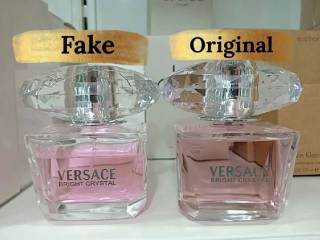
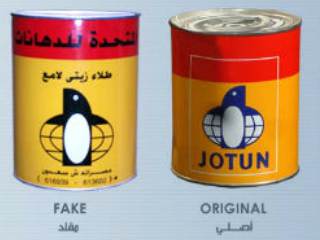

What are the cases of commercial fraud
Any of the following acts shall be considered commercial fraud:
- Importing, exporting, re-exporting, manufacturing, selling, displaying or possessing with the intention of selling, storing, leasing, marketing or trading, counterfeit, corrupt or counterfeit goods.
- Advertise fake or fake prizes or discounts.
- Exploiting, presenting or promising to offer commercial advertisements in misleading promotion, incorrect advertising or promotion of adulterated, corrupt or counterfeit goods.
- Offer, provide, promote or advertise fraudulent commercial services.
Punishment
1. Imprisonment (one month – two years)
2. Fine (50,000 – 250,000) AED
Aggravating circumstance: The commodity was human or animal food, prescription drugs, agricultural crops or organic food products.
Fine (AED 250,000-1,000,000)
3. Confiscation or destruction of food, medical drugs or crops or products.
4. Confiscation of tools used in the crime.
5. Publishing the judgment at the expense of the convicted person in two local daily newspapers in Arabic